01/13/2026
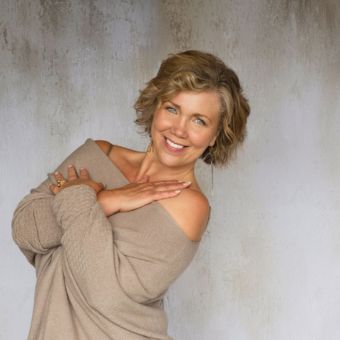
Estheticians aim to help women feel beautiful and confident in their own skin. Award-winning esthetician Amy Wall is taking that mission further. She is on a quest to impact how 1 million women see themselves with her Three Mirrors concept. In this episode of ASCP Esty Talk, Maggie and Ella dive into Amy’s method and how estheticians can move beyond “technician mode” to create signature, soul-led services that truly transform clients.
ASCP Esty Talk with hosts Ella Cressman and Maggie Staszcuk
Produced by Associated Skin Care Professionals (ASCP) for licensed estheticians, ASCP Esty Talk is a weekly podcast, hosted by licensed estheticians, Ella Cressman, ASCP Skin Deep Magazine contributor, and Maggie Staszcuk, ASCP Program Director. We see your passion, innovation, and hard work and are here to support you by providing a platform for networking, advocacy, camaraderie, and education. We aim to inspire you to ask the right questions, find your motivation, and give you the courage to have the professional skin care career you desire.
About our Sponsors
Comfort Zone – The Italian, multi-awarded science-led, longevity-focused skincare trusted by professionals worldwide. Founded by Dr Bollati, a pharmacist, and powered by over 60 in-house chemists and skin care experts. Clinically tested formulations blend clinical precision, regenerative botanicals, and biotechnology research to transform skin with intention. Part of The Davines Group, certified B Corp since 2016.
Website: https://us.comfortzoneskin.com/
Instagram: https://www.instagram.com/comfortzoneskin_official/
Massage Envy is a national franchisor and does not independently own or operate any of the Massage Envy franchised locations nationwide. The Massage Envy franchise network, through its franchise locations, is the leading provider of massage services. Founded in 2002, Massage Envy now has approximately 1,100 franchise locations in 49 states that have together delivered more than 200 million massages and skin care services.
Website: www.massageenvy.com/careers/career-areas/esthetician
Facebook: @MassageEnvyCareers
LinkedIn: @MassageEnvy
Savvy Certification offers the CIDESCO-endorsed CPD program & advanced courses in sugaring hair removal—a sensitive-skin approved, low-overhead service that delivers smoother, longer-lasting results for clients. Estheticians or Esthi-students can earn an industry-recognized sugaring credential and Practitioner Badge, while gaining official inclusion in a registry of verified practitioners. With lifetime access to tutorial videos, editable marketing kits, and customizable client forms, practitioners gain essential tools to quickly launch and grow their new service with ease. Train with confidence, fully online or in-person with a verified education partner.
Website: https://www.savvycertification.com/
Instagram: https://www.instagram.com/savvycertification/
Facebook: https://www.facebook.com/profile.php?id=61551041289055
LinkedIn: https://www.linkedin.com/company/savvy-certification/
About Associated Skin Care Professionals (ASCP):
Associated Skin Care Professionals (ASCP) is the nation’s largest association for skin care professionals and your ONLY all-inclusive source for professional liability insurance, education, community, and career support. For estheticians at every stage of the journey, ASCP is your essential partner. Get in touch with us today if you have any questions or would like to join and become an ASCP member.
Connect with ASCP:
Website: www.ascpskincare.com
Email: getconnected@ascpskincare.com
Phone: 800-789-0411
Facebook: facebook.com/ASCPskincare
Instagram: @ascpskincare
About Amy Wall:
Amy Wall is an award-winning esthetician and transformational esthetics mentor who teaches practitioners how to turn their work into a signature soul-led service.
After being mentored by the biochemist who discovered the peptide, she went on to blend skin science with energetic beauty and identity work, helping estheticians rise beyond technician mode.
Through her Soul Service method, she guides practitioners into becoming an industry of one with clients who stay, refer, and transform. Amy is the founder of Skintessa and a leading voice in the future of esthetics.
Connect with Amy Wall:
Website: https://www.theskintessa.com/
About Ella Cressman:
Ella Cressman is a licensed esthetician, certified organic formulator, business owner, ingredient junkie, and esthetic cheerleader! As an educator, she enjoys empowering other estheticians and industry professionals to understand skin care from an ingredient standpoint rather than a product-specific view.
In addition to running a skin care practice, Cressman founded a comprehensive consulting group, the HHP Collective, and has consulted for several successful skin care brands.
Connect with Ella Cressman:
Website: www.hhpcollective.com
LinkedIn: linkedin.com/in/ella-cressman-62aa46a
About Maggie Staszcuk:
Maggie Staszcuk serves as the Program Director for ASCP and is the cohost of ASCP Esty Talk podcast. With over 18 years’ experience in the esthetics industry, her diverse background includes roles in spa management, spa and med-spa services, and esthetics education. Since becoming a licensed esthetician in 2006, she carries a range of certifications in basic and advanced esthetics. Maggie is dedicated to equipping estheticians with the knowledge and resources they need to thrive in their careers.
Connect with Maggie Staszcuk:
0:00:00.5 Speaker 1: Did you know that working at a Massage Envy franchise location comes with perks you'll love? You'll have access to professional skin and body care products from brands you know and trust like Marini Skin Solutions and PCA Skin, as well as free continuing education and training opportunities. And of course, an annual ASCP membership with insurance at no cost to you. Learn more about location-specific benefits when you search for open esthetician positions near you at massagenvy.com/sdcareers and apply today.
0:00:41.3 S1: Meet Comfort Zone, the Italian science-led skincare brand trusted by estheticians and featured in over 7,000 spas worldwide. Founded by pharmacist Dr. Davide Bolatti, Comfort Zone is powered by over 60 in-house chemists and skin care experts dedicated to skin longevity. Our clinically tested formulas blend advanced botanical and biotechnology research to deliver real results and elevate every treatment experience. Discover more at us.comfortzoneskin.com or follow @comfortzoneskin_official on Instagram.
[pause]
0:01:29.2 Maggie Staszcuk: Welcome to ASCP's Esty Talk. I'm your co-host Maggie Staszcuk and ASCP's program director.
0:01:34.2 Ella Cressman: And I'm Ella Cressman, licensed esthetician, ingredient junkie, forever student of the skin, and content contributor for Associated Skin Care Professionals. We are so excited today to have Amy Wall join us here on Esty Talk. Very, very interesting subject, but a little bit about Amy. Her mission really is to shift and uplift how one million women feel about themselves when they look in the mirror and mentor the estheticians who will take them there. Hi, Amy.
0:02:06.4 Amy Wall: Woo! Hi. Yeah, I just love hearing the mission. I'm like, yes, sign me up for that.
0:02:13.2 MS: Welcome to the show. We're excited to dive into this conversation.
0:02:16.7 EC: Before we dive in, let me tell you a little bit more about Amy. Amy is an award-winning esthetician and transformational aesthetics mentor who teaches practitioners how to turn their work into a signature soul-led service. After being mentored by the biochemist who discovered the peptide, she went on to blend skin science with energetic beauty and identity work, helping estheticians rise beyond technician mode. Through her Soul Service method, she guides practitioners into becoming an industry of one with clients who stay, refer, and transform. She is the founder of Skintessa and a leading voice in the future of esthetics. Woof.
0:02:55.9 MS: Amy, you've developed a really unique way of understanding how we see ourselves through what you call the three mirrors. Can you share what that concept is and what inspired it?
0:03:07.1 AW: Absolutely. So again, I'm so grateful to be here. I'm so grateful for this platform. I am a big fan of ASCP. I have been a member over the years for a really, really long time. So thank you. And the three mirrors is really the jewel of my heart that I'm bringing forth to the industry that is addressing how a woman sees herself, which is the first mirror, in how she sees herself in her mirror, right before she gets ready to go to work and before she goes to bed when she does her skin care. That's the physical first mirror. And then the second mirror is that mirror of how she feels that she looks when her eyes are closed. Right? We all have that inner self-image that we talk about self-image and we talk about self-esteem here and there, but in the esthetics industry, it's never really addressed. But we all have this inner image of how we think that we look. And I can just prove it to you right now. When somebody posts a picture of you online that didn't come from your own selfie camera and you think to yourself, wait a second, I don't look like that.
0:04:18.0 AW: Or back in the old days when we used to get our photos back from the CVS and we would open them up and go like, what, that's not what I look like. So we all have this sort of inner self-image. And there's a lot of research that points to that this inner self-image acts as a set point and a thermostat for our biology. And then the third mirror is the mirror of how we think other people view us. Right? It's like, just for example, even when you just write off an email, if you go back to read your email, you read it through the other person's perspective, right? Or if you film a piece of content, if you're a content creator, you go back and watch it through other people's perspectives. And especially with women, we are a lot of times, and especially in the esthetic industry, we're helping our clients achieve a standard. And so I think it's really worth looking through these three mirrors so that we can harmonize them and then we can understand that how other people see us is actually not real beauty.
0:05:27.3 EC: I'm thinking of recently I had some headshots done. I don't think I've even shared this with you yet, Maggie. And they came back and what I saw in the pictures, I was like, who is that? And I even expanded the picture, zoomed in really, really close. I'm like, this can't be me. No way can this be me. It was very interesting. Of course, my husband's, "Oh, you look so pretty." I'm like, no, I really don't.
0:05:49.5 MS: I think we can probably all relate to that 100%.
0:05:52.3 EC: Absolutely. This is not the same person that I got ready in the mirror and saw before I went to this headshot session. Absolutely.
0:06:00.9 AW: I was gonna say, did you know that the way that we actually are able to take images in is that we see, like, let's say, in the physical mirror. First of all, it's a reversed image, right? We're not seeing ourselves the same way that other people see us, so that's why the perspectives are valuable. But when we look in a physical mirror, our eyes are taking in shadow and light, and then it's being run through belief filters. It's called top-down processing. So we have to actually understand that the physical mirror and other people's cameras are not telling the truth about us.
0:06:42.3 EC: I've been saying that for years.
0:06:42.7 AW: And people are...
0:06:46.7 EC: ____ the truth.
0:06:47.2 AW: And look at, there is a quote that has been going around since the dawn of time, "Beauty is in the eye of the beholder." But the reason why I've come here for the esthetics industry is that if we want to have more success and get more transformation and have a deeper connection with our clients and be able to actually charge more, we really have to understand that we're leading the client through an experience of learning to see herself in a whole new light.
0:07:20.4 MS: Starting with the first mirror, and you've kind of maybe touched on this a little bit already, but how do you describe its role in the way we interpret our reflection or physical identity?
0:07:32.7 AW: I love that question, and it's really, really basic. So these could be, this could be a book written about each mirror, right, and it could be very lofty, but let's just bring it down really simply. It's the relationship we have with our mirror at home. It's about when we look, and the reason I got here was that, well, first of all, I'm the Kelly Clarkson of The Skin Games, and how I won that platform is I developed a mirror ritual. So that was back in 2016. So I've just been thinking about it this whole entire time, and I actually developed that ritual when I was 14 years old back in 1984. So this is something I've thought about a long time. But when we're working with a client and trying to help her get the best results, we have to address her inner critic, which is that inner mirror, and she's using the mirror incorrectly at home. All of us are looking in the mirror from time to time and going like, "Oh, the wrinkles," and we're just bringing a lot of the inner critic voice to the mirror. So I just start with really simple mirror hygiene.
0:08:36.4 AW: Connect with yourself every morning and every evening with your eye contact. Just connect with your eyes. Don't scan for flaws. There's a time and a place for looking for the changes that you're seeing in the mirror. I call it an assessment. I like my clients to do it once a quarter, or the esthetician can help guide their client through an assessment where we're leaving the inner critic off to the side, but we're certainly going, "Hey, there is this amount of sun damage. Hey, there is this amount of expression lines that have gotten chronic. Hey, there is this amount of inflammation. Hey, there is this amount of this," and let's build a plan to help you get there. But I think very simply, it's just about learning how to practice mirror hygiene and connecting with yourself through the mirror with eye contact, which activates a part of the brain that is responsible for empathy. And then that's the real, you know how self-care and self-love and skincare are so inextricably intertwined now? I was really at the forefront of that. And if we really want to talk about skincare as self-love and self-care, it's about empathizing and accepting ourselves right where we're at, right here, right now in the mirror.
0:09:47.7 MS: I love what you're saying about mirror hygiene. And there's something to be said about, sometimes people say, "Oh, that person doesn't really know what they look like," meaning they are radiating their inner beauty, they have confidence, and it's not about seeing what's superficially there.
0:10:07.7 AW: Yeah, I love that. I think that happens a lot. And somebody like that who doesn't know what they look like, that's just radiating outward, they're really operating from their inner mirror, right? They really just, they see themselves, and they've probably also detached from the mirror of how other people perceive them. But why this is relevant for estheticians is that every client that comes in the door and lays on our bed, on our table, has a goal of some sort. Whether it's just to have the experience and relax, maybe they'd love to connect in with their inner self, or maybe they would love to actually look in the mirror and see some really significant change. It's worth finding out how she sees herself and how she'd love to see herself.
0:11:01.4 EC: Hold that thought. We'll be right back.
0:11:03.5 S1: Estys, if you're not yet offering sugaring hair removal services, you're missing out. For clients, sugaring provides lasting results, is more gentle, and leaves the skin looking radiant. For businesses, it's eco-friendly, safe, hypoallergenic, and most importantly, profitable. If I've piqued your interest, check out the official CIDESCO-endorsed CPD sugaring program offered by Savvy Certification. Stand out with industry-recognized training, be added to a global registry, and gain the resources you need to start offering this service. Learn more at savvycertification.com. That's savvycertification.com.
0:11:49.4 MS: Okay, here we go. Let's get back to the podcast. It seems like there's some surface-level assumptions even made about ourselves, and then I'm hearing that there is a depth perception, maybe we can call it too, of this mirror work. So when someone moves or starts to move beyond that initial surface-level mirror, what changes for them and how do you introduce that next layer of reflection?
0:12:14.8 AW: Well, in my work, we ignore the third mirror altogether and it magically updates when you update the inner mirror. That is what's crazy. Now, there is a book called 'Psycho-Cybernetics' that was written in the 1960s by a plastic surgeon named Maxwell Maltz. It is a personal development bible. All of the big personal development coaches, Tony Robbins, everybody, they're all using it. Everybody talks about identity as the big lever that makes transformation. And he was a plastic surgeon. Why this has not taken off in the beauty industry? Well, there's not a lot of money to be made when you understand that you can update the way that you look on the inside. Now, I use this exclusively. I don't do anything else but work on my inner mirror and have really, I connect in with myself and have intimacy with my skin. And yes, I do use some great growth factors and things, but not, I'm not going crazy on the products and treatments. So if you understand that that is directing the biology, then things change really, really quickly. When someone updates the way they see themselves on the inside and practices the physical mirror hygiene and some of the other techniques, all of a sudden people come from out of the woodwork, "You look different. What are you doing? There's a glow."
0:13:37.1 EC: I think that's something that happens too, like when you're in love, right?
0:13:41.2 AW: Yes.
0:13:41.3 EC: You have that glow. People see it. But I do want to say, you said beauty is in the eye of the beholder, so I want to share a story with you guys about my husband, who's a darling, but I don't trust him. So the other day, a couple of weeks ago, I had an event at the shop and it was snowing and you guys know I hate walking on anything slippery. So I had a cute outfit on. It was pixie pants that are meant to be worn inside only. I had these big socks I pulled all the way up, like halfway up my calf, and I had my Nike ice walking shoes on and a sweater. So really cute from like mid-calf up, but hot mess from knee down if you took in that perspective. But I walked out and I was like, "Hey, babe, does this look okay?" He's like, "Oh my gosh, you look great." I'm like, "I do?" He's like, "Oh, yeah, it looks really good. It's gonna be a great event." I'm like, "I don't trust you anymore if you think that this is cute." So I understand from your work, Amy, that there is a mirror that involves how we think others see us. So how do you help someone recognize when that external influence is affecting how they show up? Like for me, I'm like, "I don't believe you," because it's disagreeing with the mirror that I saw, or I'm aware of what I look like right now, but yeah.
0:14:56.0 AW: Well, I remember my son always told me when I told him he was great in everything he did, he said, "Everybody's mom tells them that." And he didn't want to hear that. He did not want me to overly tell him he was great. So that's kind of a similar thing. So for me, this, all the three mirrors all comes down to the consultation. I can do a very surface-level mirror consultation for someone that is not open to going real deep, and it's not probably appropriate to go that deep with someone who doesn't understand that it can be a psycho-spiritual approach. So I generally advise the estheticians that I teach this to, to wrap it into transformational programs so there's a little bit longer of a transformation period. But just finding out what's important to them, if they need to attract a mate or get that job, the third mirror is still really important. Do you want to go do a TED Talk? You want to get on a videocast? You want to do a livestream? You want to be on TikTok? Hey, the third mirror is still really important. I love to be able to project glamour.
0:17:06.3 AW: Glamour is actually, the root of the word is a magical spell, right? It's not meant to last forever. I think when we get into trouble is, you can see when people are chasing procedures is because they have mistakenly believed they need to look beautiful to other people all the time. And what happens 80% of the time, their face gets distorted, they become a caricature of themselves. So what this work is really powerful at addressing is the ever-growing issue of beauty dysmorphia. But I have my own little story I want to tell, and that is of when I was in my 40s. I'm 56 now. When I was 45, I was on the, I had, well, I quit doing Botox when I was 45. But let's backtrack it to like when I was 44. I was doing Botox. I was playing the mainstream beauty game the way everybody played it. I was working hard, had the employees, the real employees. I was just like huge overhead, huge back bar, huge everything, and really was afraid of aging, really was feeling like my worth was going down the toilet. And I found myself in the office of a plastic surgeon wondering why my eyes had bunched up around the sides and asking, am I a candidate for getting a blepharoplasty? Hoping she'd say no, there was a new eye cream or treatment of some sort. And no, she said, "Yeah, you are a candidate," and handed me a proposal for $7,500 or something like that. That was a decade ago. Somehow, thank God, that woke me up and I was like, "Wait a second. I think it's the Botox that's pushing my eyebrow down." But my story that I want to bring up, why I'm bringing this up, is she never handed me the mirror and said, "What are you seeing?" I would have said to her, "I see that this one eyebrow is pushed down more." And then she could have said, "Oh, are you using Botox? Oh, yeah, my office is doing it for you. Oh, well..." So she didn't have my best interest at heart. She had her own best interests at heart. And that's another thing that is really important if you're gonna do this type of work with a client.
0:18:09.6 AW: It's not about selling them something. It is about having their best interest at heart, leading them through a transformation, setting up what that looks like, and then getting out of their way to get there and guiding them at home and in the office with treatments and setting them up at home. Ironically, this makes for very high sales, because when they really understand you have their best interests at heart, they just are blown away because hardly anybody invites them to tell the practitioner what they are seeing. Nobody's saying that. I think this is the number one opportunity estheticians have to rise above the noise that's happening. And when you introduced me, I said to rise above technician mode. I don't know if you guys are talking about this on other podcasts, but the industry is changing. It's changing and people are scared. People are really, really struggling out there. Estheticians are struggling. I have my finger on the pulse. I'm in the Facebook groups, I'm in the Reddit groups. I'm hearing how people are feeling. And it's because the consumer is much more savvy now and she's not gonna go in and pay money to something that doesn't add to her bottom line. And it's not enough just to give a surface glow anymore. We have to help them with their wellness, with their lifestyle. We don't have to, but if we want to be highly paid and in demand, it's recommended.
0:19:36.5 EC: That was literally an eye-opening experience for you.
0:19:39.8 AW: It was literally an eye-opening experience. And now, no extra saggy skin at all.
0:19:44.8 EC: Ain't that something.
0:19:46.0 AW: I was thinking about that today. I'm like, if I went back into that surgeon and just be like, "Where is the saggy eye skin?" It's gone because I stopped doing Botox.
0:19:54.8 MS: You said something that is resonating for me, Amy, and that is handing the client a mirror and asking them to point out or to say what they notice to you as the esthetician. And I am curious how many estheticians actually do that. Ella and I do talk a lot about the importance of the consultation and the skin analysis and of course, giving the client what's best for them. But to actually say to the client, "You show me what you think you need," I think is very valid and very important.
0:20:31.9 AW: Can I just say that your client is not... Hardly anyone is doing this because the client is going to recoil and absolutely not want to look in the mirror with you. It takes... That's why I have a whole... The esthetician is resistant to do this, and the client could be really resistant. I've been practicing this and I have my ways in now for a decade of practicing this with people. But when I first started doing this, my clients laughed, cried, screamed, ran out of the room. And then that just makes you wonder, if this is really about the way we look, why can't we look at ourselves? So let me just gift everybody that's listening to this podcast something really easy you can start doing today that I think can be a huge game changer in the way that you serve and sell. And in my world, selling is serving, selling is love, because you're helping that client really transform and adding to her bottom line. And it's this: whether or not you even handed her the mirror, try handing her the mirror, make it very casual and just say, "What big result would you like to create with me today?"
0:21:44.6 AW: Hand the mirror. "What big result would you like to create with me today?" You're gonna get so much information from her just based on that one question. From them about that one question. And it can just start with that. And then, one of my last clients that I was working with virtually, and I charge big money for this, for anyone listening, there's more business models out there than just trading time for money on the bed. I helped a client replace an $85,000 facelift surgery with this work. So it started with, "What big result do you want to create with me today?" And once she owns that, she starts being a co-creator in her own results. You've enrolled her and there's science on this, Maggie and Ella. There's the biology of belief, we're bringing in epigenetics here. The placebo effect has been sold to us as something negative. It's the mind-body connection. This is neuroscience, this is neuro-esthetics. There's a lot of science that backs this up and I think you're gonna be seeing more and more of it as time goes on.
0:22:48.3 EC: Thank you so much, Amy. That was awesome.
0:22:50.9 MS: Now, listeners, we want to hear from you. Share with us on social media through Instagram, Facebook, or send us an email at getconnected@ascpskincare.com. In the meantime, thank you for listening to ASCP's Esty Talk. For more information on this episode or for ways to connect with Amy Wall, Ella, or myself, or to learn more about ASCP, check out the show notes.